Shop, barn and porch roof comparison
Standing seam vs PBR is mostly a question of how long you will keep the building and how much upkeep you will accept. PBR panels cost less, go on faster and span open purlins, but every screw through the face needs watching as the years pass. Standing seam hides its fasteners, moves freely in the heat and asks little of you, at a higher price.
Permanent Metal Roofing Systems installs both PBR and standing seam on shops, barns, barndominiums, garages and porches across Dallas-Fort Worth. Here is how we would choose, including the jobs where PBR is plainly the better buy.
How Do PBR and Standing Seam Compare at a Glance?
PBR wins on first cost, speed and spanning open framing. Standing seam wins on upkeep, leak resistance over the years and looks.
| Factor | PBR panels | Standing seam |
|---|---|---|
| How it is held down | Screws with rubber washers through the face of every sheet | Hidden clips under the seams; nothing pierces the flat of the pan |
| Coverage per sheet | About 36 inches | 12 to 20 inches per pan on our profiles |
| Framing below | Made to span purlins | Usually a solid deck; two of our profiles can span open framing |
| Heat movement | Held at each screw, so holes can slowly stretch | Pans slide on floating clips |
| Lowest slope | Set by the panel maker; low pitches need sealed laps | Snap lock 3/12; mechanical lock as low as 1/2:12 |
| Ongoing care | Screw and washer checks for the life of the roof | Mostly flashing and sealant checks |
| Up-front cost | Lower | Higher |

What Is the Difference Between Exposed Fasteners and Standing Seam?
Where the screws go. On PBR, screws pass straight through the steel into the framing and stay visible for the life of the roof. On standing seam, clips grip each pan by its edge and the next pan covers them, so the weather side has no holes.
Each PBR screw seals with a rubber washer pressed against the panel, and done right that seal stays tight for years. But a large shop can carry thousands of screws, each a small, permanent opening that relies on rubber staying soft. Our corrugated and PBR roof page explains the bearing leg that gives PBR its strong side lap.
How Much Screw Upkeep Does a PBR Roof Need Over Time?
Some, and it grows with age. Plan on looking the fasteners over every year and on a round of screw work at some point after the first decade.
Fastener maker SFS puts it plainly: exposed systems need more maintenance and are more prone to leaks, and temperature swings can slot the screw holes larger. The usual repair is a larger-diameter screw in the same spot, and the panels are normally still sound when their screws give out.
Texas sun speeds that clock. Washers harden after summers of high UV, and each hot afternoon and cool night works every screw a little. Driving each one straight and snug, without crushing the washer, buys the most years. Re-screwing an aging roof is routine metal roof repair work, best done before drips reach your tools or hay.
Standing seam has no field screws to age; its upkeep is mostly flashing and sealant. Our snap lock vs. mechanical lock guide compares its two seam types.
How Do the Two Panels Handle Texas Heat?
Standing seam handles it better because its pans can slide. A PBR sheet is pinned at every screw, so its daily growth and shrinkage pulls on those holes.
Steel changes length by roughly a quarter inch over a 30-foot run for each 100 degrees of temperature swing, and a sunlit roof swings far more than the air. On a short porch or garage slope, PBR copes well. On long shop and barn runs the movement adds up, which is why SFS advises against exposed fasteners on long panel runs.
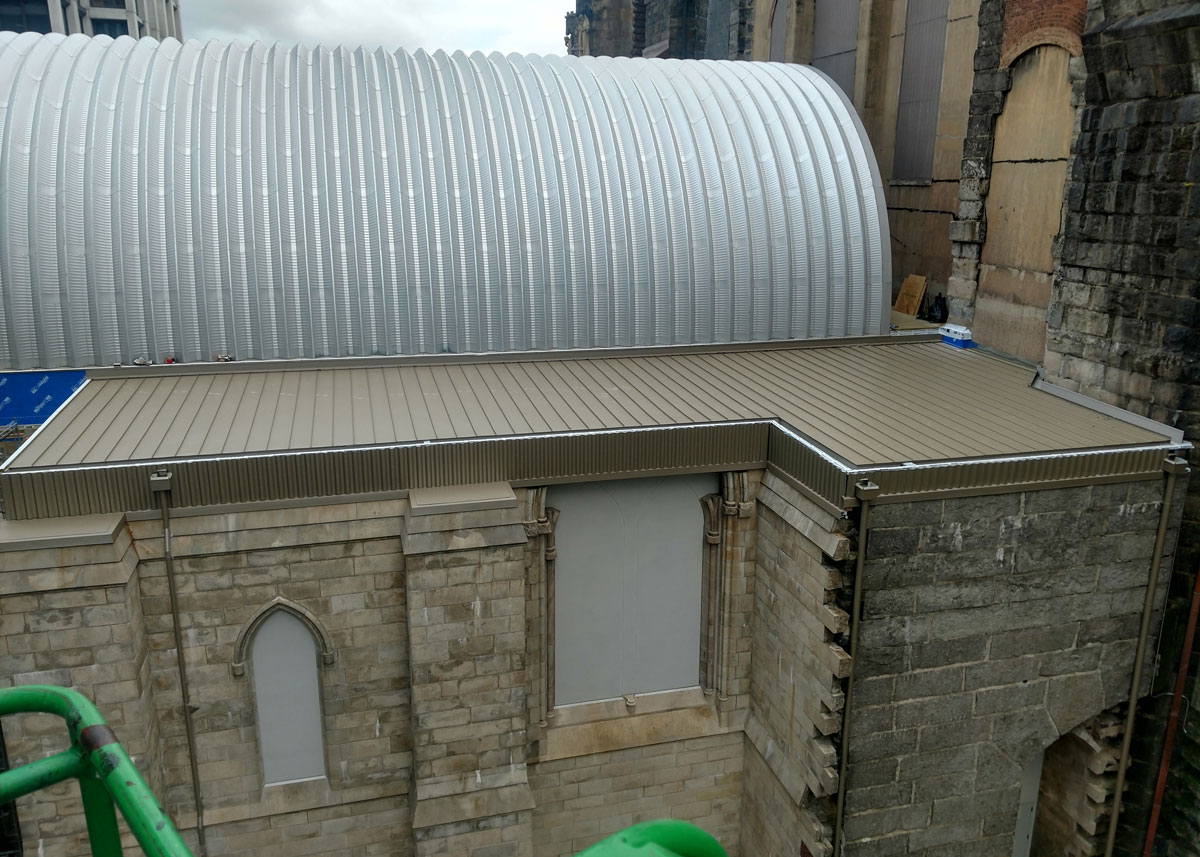
Standing seam pans are pinned in one spot and float on clips elsewhere, so the steel travels without stressing a fastener. For a very long, low building, a clip-held 2-inch mechanical lock is the usual answer; see commercial metal roofing.
What Roof Slope Does Each Panel Need?
Standing seam goes lower. Our snap lock needs 3/12 and our mechanical lock goes down to 1/2:12, while PBR depends on its maker’s rules for sealed laps.
Chapter 9 of the 2021 International Residential Code sets floors, not targets: lapped panels such as PBR need 3:12 without lap sealant and may go to 1/2:12 with it, and standing seam may go as low as 1/4:12. Panel makers often set stricter limits, and their installation guide is the rule we follow.
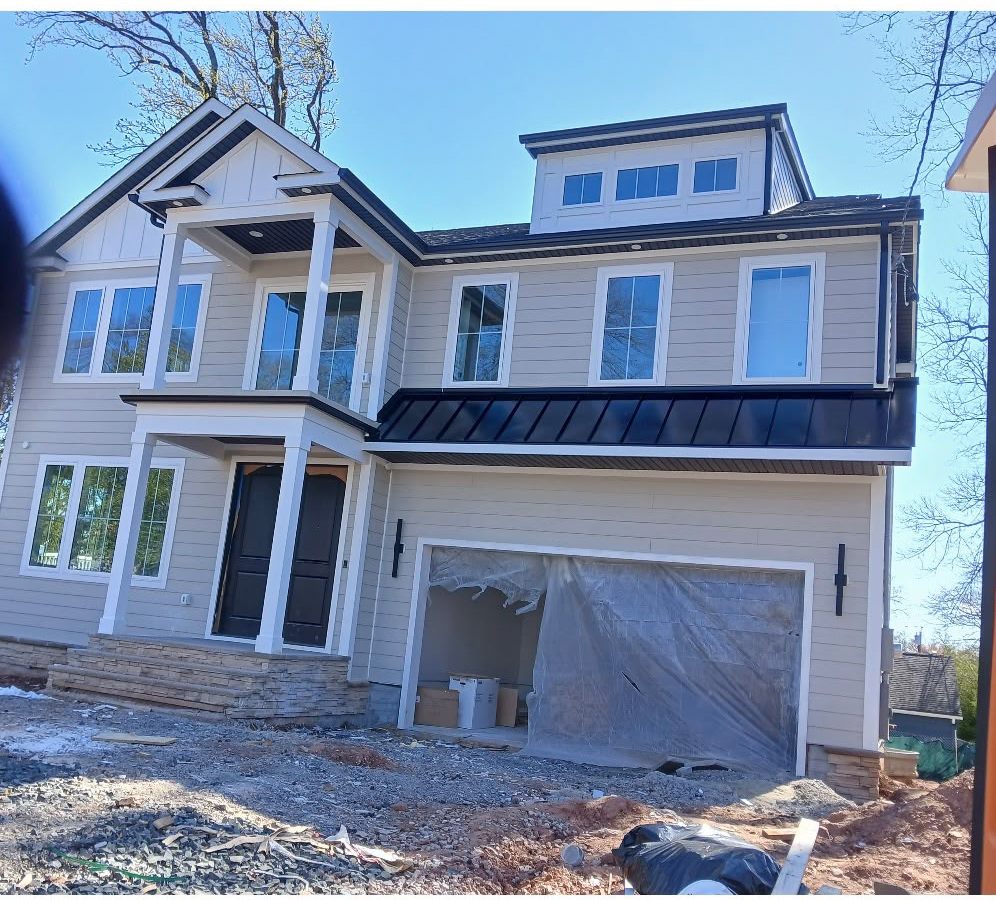
Low porch roofs and lean-tos off a shop are where this bites, since many are framed quite flat. A mechanically seamed panel is the safe call there; see mechanical lock standing seam.
Do You Need Purlins or a Solid Deck?
PBR is built for purlins, and most standing seam is built for a deck. That alone often settles the choice on an existing pole barn or steel building.
PBR ribs let the sheet bridge the gaps between purlins, at spacing set by the panel’s load tables and gauge. Standing seam on houses goes over plywood or OSB, though two of our profiles, a 1.75-inch snap lock and a 2-inch mechanical lock, are also rated for open framing. For roofs we install, site-specific engineering can be arranged.
A deck costs more but pays back three ways: a quieter roof in rain, a surface for underlayment as a second line against leaks, and a flat bed for the panels. Wide flat pans can show waviness on a big shop roof, while PBR ribs mask it; our oil canning guide explains how striations help.
How Do You Keep Condensation From Dripping Inside a Metal Building?
Stop humid inside air from reaching steel that has cooled overnight. Bare panels over open purlins can sweat on cool mornings and drip onto trucks, tools and feed, whichever panel you choose.
Humidity around Dallas averages about 62 percent, and spring and fall often pair muggy days with cool nights. The common fix is blanket insulation with a laminated vapor retarder facing the inside, kept continuous. A Metal Construction News article notes that tears and holes in that facing cause more condensation trouble than its rating does.
Other routes include panels with a factory-applied anti-condensation fleece, or a solid deck with underlayment and ventilation. A barndominium with living space under the roof needs insulation, air sealing and air conditioning planned together.
Which Holds Up Better in Hail?
Neither, by profile alone. Steel thickness and the tested assembly matter far more than whether the fasteners show.
Going from 26-gauge to 24-gauge adds roughly 28 percent more steel and noticeably more dent resistance; our 24 vs. 26 gauge guide has the numbers. Tall PBR ribs stiffen the sheet and hide small dimples, while flat standing seam pans show them more readily.
Want an insurance credit? Get the UL 2218 listing that matches the exact panel, gauge and fastening. Class 4 listings exist on both sides of this comparison, each for a specific tested product, and under state insurance guidance each carrier sets its own credit. Our Class 4 roofing guide explains the test.
How Will Each Roof Look Next to Your House?
Standing seam matches a house; PBR matches a farm. Both come in the same PVDF colors, so a shop and a home can still read as a set.
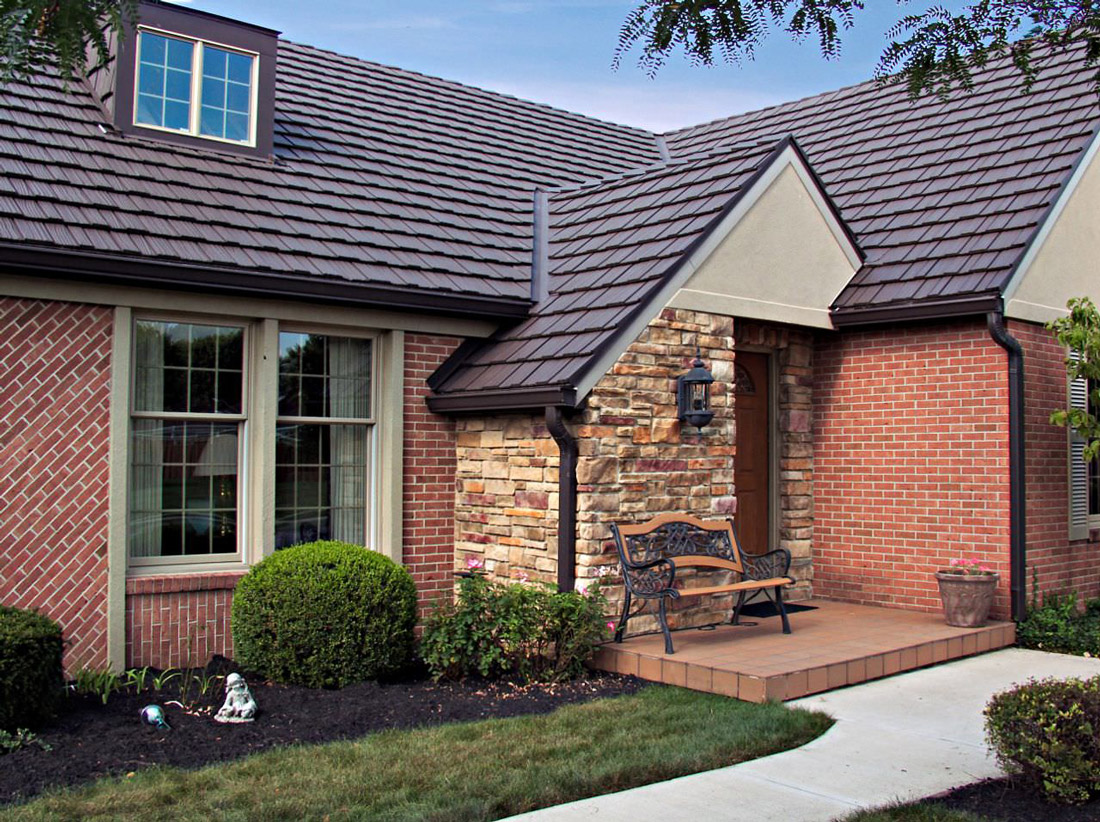
On acreage, a PBR barn beside a brick house looks right at home. Lots of one to two acres with outbuildings are common in Lucas, and many homes in Annetta have detached shops and barns. Closer in, deed restrictions and HOAs often cover detached buildings too, and a garage or porch seen from the street usually looks better in standing seam.

Trim is where an outbuilding looks finished or cheap. We bend ridge caps, rakes and eave trim in house in the roof color, and fit closures cut to the rib shape to keep out insects and wind-driven rain. Pick shades on our color chart and see the pieces on our flashing page.
How Do Cost and Install Speed Compare?
PBR is usually the most economical metal roof we install and the quickest to put on. Standing seam costs more because it uses narrower pans, clips, more trim work and, on mechanical lock, a seaming pass.
Each 3-foot PBR sheet covers a lot of roof with a row of screws at each purlin, so a crew can dry in a shop fast, while every standing seam clip is set by hand. The gap narrows when PBR needs new purlins or insulation, and widens when standing seam needs a new deck.
What moves your number: area and pitch, gauge, PVDF or SMP paint, framing or deck work, tear-off, closures and insulation. Your written estimate itemizes each one after we measure. The metal roof cost page covers the factors.
When Is PBR the Smart Choice?
Often. PBR is the better buy when:
- The building is a hay barn, equipment shed, stable or workshop where cost matters more than looks.
- An existing pole barn or steel building already has sound purlins and no deck.
- Every slope is 3/12 or steeper and the panel runs are short.
- The site is open to high wind and the PBR assembly carries the stronger tested uplift rating; SFS notes some exposed systems out-rate some standing seam on uplift.
- You expect to replace or expand the building before long.
Pick 24-gauge where hail is a concern, and plan on a yearly look at the screws.
When Is Standing Seam Worth the Extra Cost?
- People live or work under the roof, as in a barndominium or finished garage, where a leak costs more than the roof.
- Some of the roof sits under 3/12, or the runs are long and take full afternoon sun.
- The building sits near the house or the street, or an HOA reviews it.
- The house already has standing seam and you want the shop or porch to match.
- You would rather not climb up to check screws in the years ahead.
Our standing seam also comes with a Lifetime Non-Prorated Limited Warranty covering labor along with material. It can be handed to a buyer once, and it excludes acts of God, so a hailstorm, tornado, windstorm, fire or flood is an insurance matter. PBR warranty terms are written on your estimate; see warranties. Mixing is common, too: standing seam on the house, PBR on the barn out back, all in one color.
Standing Seam or PBR? Run Through This Checklist
- What lives under the roof: hay and equipment, a vehicle, a workshop or people?
- How many years will you keep the building?
- What is the lowest slope anywhere on it, including lean-tos?
- Purlins or a deck, and is the framing straight and sound?
- How will condensation be controlled under the steel?
- Which gauge, finish and UL 2218 listing does each bid name?
Then compare written estimates for both systems on the same building.
Standing Seam and PBR Questions
What is the best metal roof for a shop?
It depends on what happens inside. For a workshop or equipment building on acreage, 24-gauge PBR with a PVDF finish is a strong value. For a shop that is air-conditioned, lived in or close to the house, standing seam usually earns its cost.
Is PBR or standing seam better for a barn?
For most barns, PBR. It spans the purlins most barns are framed with, goes on quickly and costs less. Standing seam suits a show barn, a barn with living quarters or one near the house.
Do PBR roofs leak more than standing seam roofs?
Over time, they are more likely to. Every screw is a small opening sealed by a rubber washer, and washers age in sun and heat. Yearly checks keep a well-installed PBR roof dry for a long time.
Can standing seam go on a pole barn with purlins?
Some can. Two of the profiles we install, a 2-inch mechanical lock and a 1.75-inch snap lock, are rated for open framing, with spacing set by the panel data and wind design. Others need a solid deck added over the purlins.
Can PBR panels go over a solid deck instead of purlins?
Yes. PBR can be fastened through underlayment into a plywood or OSB deck, which quiets rain noise and adds a second layer against leaks. The panel maker’s fastening pattern still applies.
How long does a PBR roof last compared with standing seam?
The coated steel in either one can last for decades. The difference is upkeep: PBR needs its screws checked and some replaced along the way, while standing seam has no exposed fasteners to renew.
Free estimate
Get Both Options Priced for Your Building
Share the building size, what it shelters and how it is framed. We will measure, recommend a panel and gauge, and can price PBR and standing seam side by side.
Get Your Free Metal Roof Estimate
Tell us about your roof. Our Mesquite office calls back the same business day to set up a free measurement and an itemized written estimate.
Prefer to talk now? Call (469) 466-2421.
Roof the Shop Right the First Time
Call (469) 466-2421. Our own crews have roofed in metal since 2006, and every ridge cap and rake on your building is bent in house to match.